KZOO BULLION / BULLION ACADEMY
Bullion Coins vs. Bars vs. Rounds: What to Compare

Read the format
| Format | Identity | Read on the listing |
|---|---|---|
| Bullion coin | Government issue | Mint, fine weight, date and finish |
| Round | Private coin-shaped piece | Maker, fine weight and design |
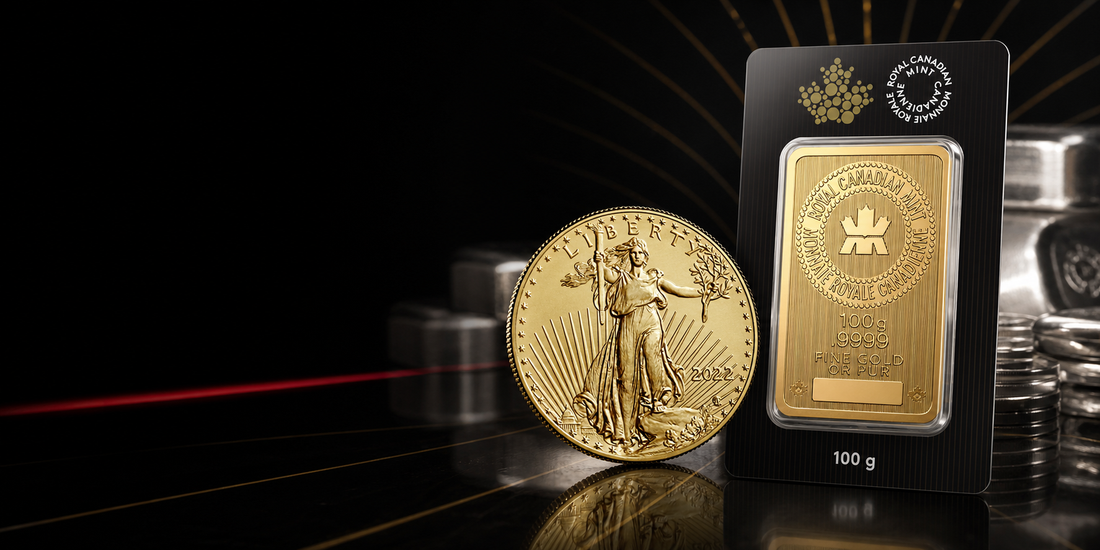
| Bar | Refined metal in an ingot | Maker, fine weight and packaging |
BULLION ACADEMY · LESSON 3 OF 6 · BEGINNER
What you will learn: Tell a government-issued bullion coin from a private round or bar, and compare the actual offering.
“Bullion” describes a way of owning precious metal in a physical form. Coins, bars and rounds can all serve that purpose, but they are not identical products. Start with identity and specifications before comparing the price.
Government-issued bullion coins
A government bullion coin has an issuing authority and a denomination. Examples include American Eagles and other national bullion programs. The denomination identifies the coin’s monetary issue; its retail value is not simply that printed number. Check the mint’s specifications for fine-metal content and fineness.
The U.S. Mint distinguishes bullion coins from its collector versions. Similar imagery can appear on bullion, proof and other issues. Use the exact product title, date and finish rather than a program name alone.
Private rounds
A round is a coin-shaped piece made outside a government monetary issue. It may use familiar wildlife, historic or artistic imagery without becoming an original government coin. The important details are its maker, metal, stated fine weight, fineness and condition.
A Buffalo-design silver round, for example, is not a Buffalo nickel or an American Buffalo gold coin. Matching an image is not enough to identify an offering.
Bars and multi-piece packages
Bars put metal into an ingot format. Cast bars and minted bars can have different textures and markings. Retail bars come in troy-ounce and gram weights, and packaging may or may not include an assay card.
A package containing several pieces needs two quantities: the metal amount in each piece and the total package amount. A 10 × 1 gram product is not a single 10 gram bar. Check the product’s minimum order and increment rather than assuming every listing is sold as one small piece.
Compare four practical details
- Fine-metal amount: compare equivalent weights.
- Product identity: distinguish maker, issuer, year and design.
- Condition and packaging: understand secondary-market wear, assay packaging and “design varies” wording.
- Total cost: include the quoted quantity and relevant delivery charges.
A format comparison
A one-ounce silver round and a one-ounce government silver bullion coin can be compared for their silver amount, but the issuer, design and premium still differ. A one-kilogram bar belongs to a different purchase size altogether. There is no universal format that is right for every budget or collecting interest.
Browse silver coins, silver bars and silver rounds to practice reading those details.
Quick knowledge check
A private round can contain precious metal without being legal tender. An assay package is not a numeric coin grade.
Sources and further reading
Reviewed November 13, 2026. Educational product information; no promise of investment performance.